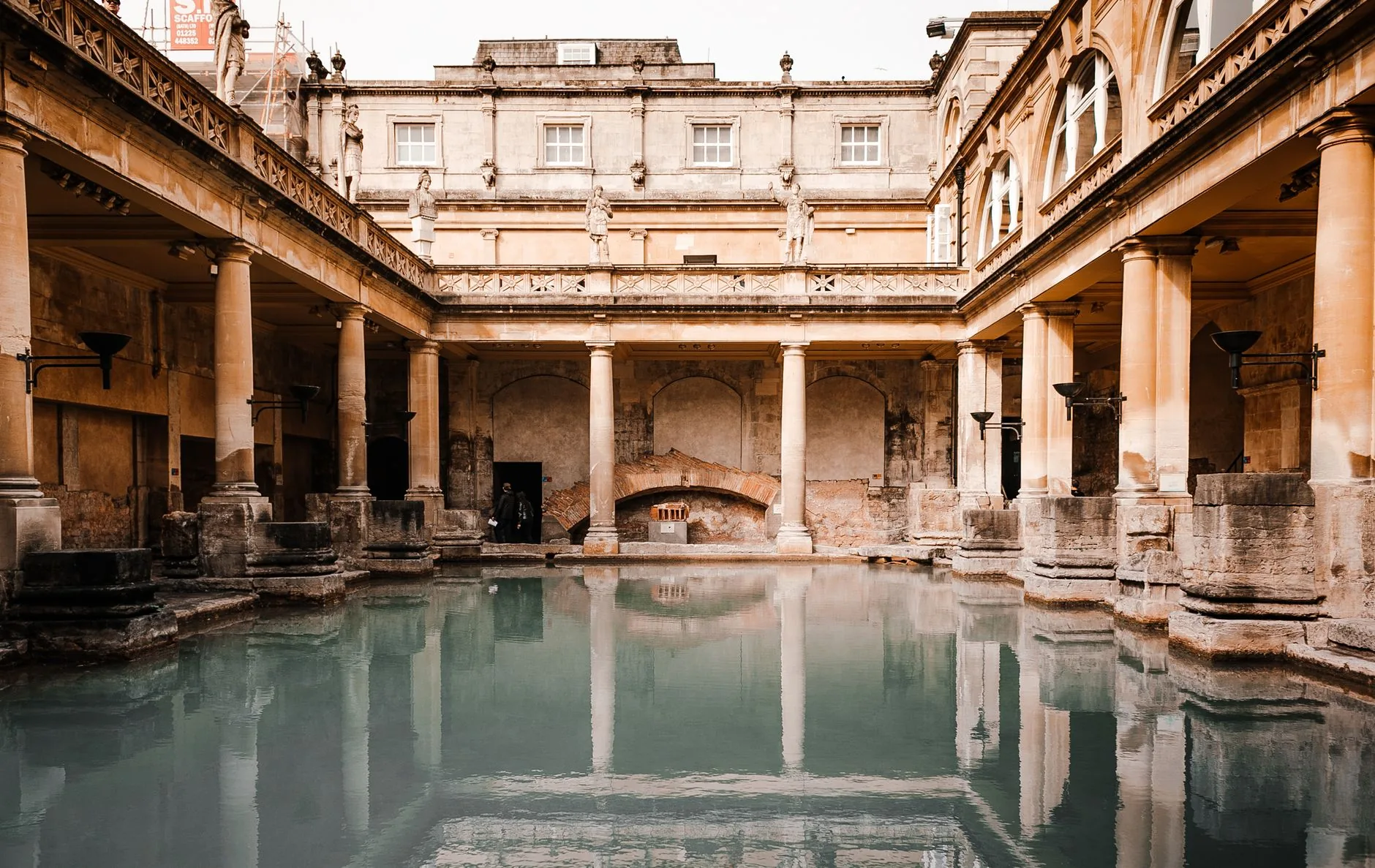
Photo by Diliff, via Wikimedia Commons (CC BY 2.5)
🇬🇧 United Kingdom · Somerset, England
Photo by Diliff, via Wikimedia Commons (CC BY 2.5)
🇬🇧 United Kingdom · Somerset, England
♨ Temperature
45°C
⛰ Altitude
30 m
⚗ pH
6.9
💧 TDS
2700 mg/L
🌊 Flow rate
115 L/s
📅 Established
60 AD (Roman)
✓ Verified on 2026-09-11
Bath's thermal spring is unique in Britain: the only naturally occurring hot spring in the country, emerging at 45°C from limestone aquifers that collect rainwater from the Mendip Hills and geothermally heat it over thousands of years underground. The Romans built the most sophisticated bath complex north of the Alps here. The spring carries 43 different minerals. Bath is a UNESCO World Heritage City. Today the Thermae Bath Spa allows bathing in the same waters in a rooftop pool.
Bath's hot spring is Britain's only naturally occurring thermal spring, and it has been in continuous use since long before the Romans arrived. The Romans built the Baths and Temple complex around it between roughly 60–70 AD over a pre-existing Celtic sacred spring dedicated to the goddess Sulis, and those Roman-era remains — now the Roman Baths museum — sit directly beside today's Thermae Bath Spa. Crucially, the historic Roman Baths are preserved as an archaeological site and are not open for bathing; Thermae Bath Spa, opened in 2006 in the adjoining Georgian-era Cross Bath and Hot Bath buildings plus a new glass pavilion, is the only place in Britain where the public can actually bathe in this natural spring water today.
The signature feature of the modern complex is the Thermae Bath Spa rooftop pool, an open-air thermal pool on top of the New Royal Bath building with panoramic views across Bath's Georgian skyline and the tower of Bath Abbey. Inside, the spa also has an indoor Minerva Bath, steam rooms infused with aromatic oils, and a range of spa treatments booked separately. Because the rooftop pool is outdoors and the water stays warm year-round, it draws crowds especially at weekends and in the evening; visitors should expect a wellness-spa atmosphere geared toward relaxation rather than a swimming pool or waterpark experience.
Thermae Bath Spa prices are structured around session length: a standard two-hour session, which includes the rooftop pool, Minerva Bath, and steam rooms, typically costs in the region of £40–45 per person, with longer four-hour sessions costing more. Spa treatments such as massages or facials are booked as add-ons on top of the session fee. Prices are highest for peak evening and weekend slots, and the spa recommends booking well in advance, as sessions frequently sell out. Robes, towels, and slippers can be rented on site for those who don't bring their own.
Thermae Bath Spa sits in the historic center of Bath, roughly a 10–15 minute walk from Bath Spa railway station, which has direct trains from London Paddington in about 90 minutes as well as connections from Bristol and Cardiff. The M4 motorway connects Bath to London and South Wales by car, but parking in the city center is limited and expensive, so most visitors use one of the park-and-ride services on the edge of town, or arrive by train. The spa is within easy walking distance of the Roman Baths, Bath Abbey, and the rest of the historic center.
Thermae Bath Spa is open year-round, and each season gives the rooftop pool a different character: winter and early spring mornings or evenings are especially atmospheric, with steam rising off the warm water into cold air, while summer sessions feel more like a rooftop lounge. Weekday daytime slots are noticeably quieter than weekend and evening sessions, which sell out fastest. Combining a visit with the adjacent Roman Baths works well outside of the spa session itself, since the two sites, though connected by the same spring, are visited and booked separately.
| Calcium | 360 mg/L |
| Magnesium | 54 mg/L |
| Sulphate | 740 mg/L |
| Chloride | 390 mg/L |
| Iron | 0.8 mg/L |
| Sodium | 180 mg/L |
The Roman Baths at Bath are one of Britain's finest Roman-era archaeological sites, built between 60–70 AD around a pre-Roman Celtic sacred spring dedicated to the goddess Sulis. The city is a UNESCO World Heritage Site. The spring water has flowed continuously for over 10,000 years, percolating through limestone over a 100-year cycle before emerging at the surface.
The sacred spring at Bath was dedicated to Sulis Minerva — a fusion of the Celtic goddess Sulis with the Roman Minerva — a rare example of Roman-Celtic religious syncretism. Thousands of Latin curse tablets thrown into the sacred spring survive today, offering an extraordinary window into the personal lives and beliefs of Roman Britain. Jane Austen's novels later immortalised Georgian Bath's spa society.
Bath's thermal spring is the product of a natural 10,000-year hydrological cycle in which rainwater infiltrates the Mendip Hills' limestone, geothermally heats at depth, and returns to the surface with no human intervention. The Thermae Bath Spa operates a closed-loop system to minimise heat loss. Roman Baths water management is studied globally as a model of ancient sustainable engineering.