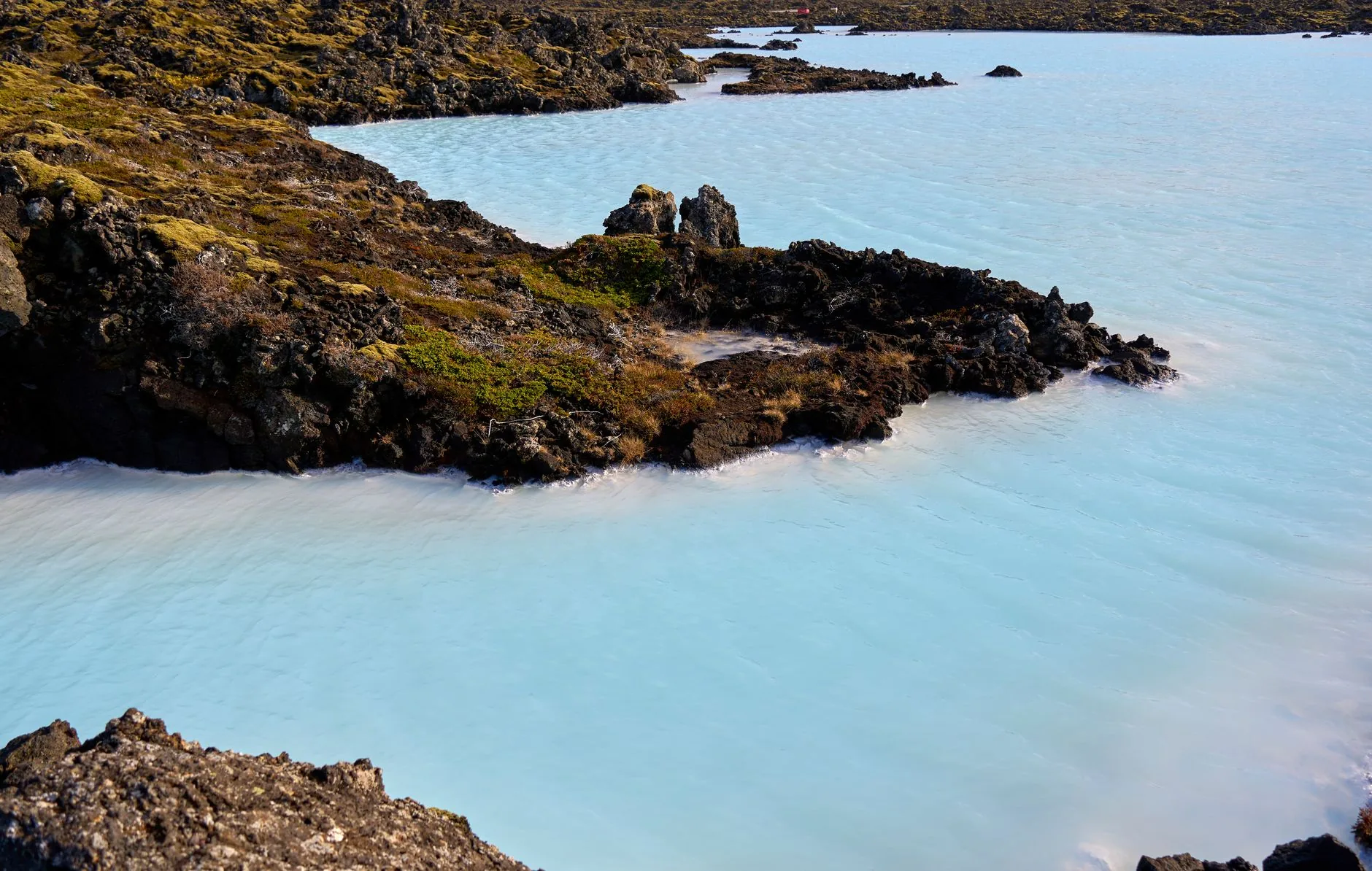
Photo by Fæ, via Wikimedia Commons (CC0)
🇮🇸 Iceland · Reykjanes Peninsula
♨ Temperature
38°C
⛰ Altitude
5 m
⚗ pH
7.5
💧 TDS
3000 mg/L
🌊 Flow rate
300 L/s
📅 Established
1976
✓ Verified on 2026-07-22
The Blue Lagoon is a geothermal spa in a lava field on the Reykjanes Peninsula. The waters are a by-product of the nearby Svartsengi geothermal power plant, which pumps superheated seawater from 2,000 metres below the surface. As the water travels upward and cools, it precipitates silica and sulphur, creating the characteristic milky-blue colour. Clinical studies have confirmed significant improvement in psoriasis patients following treatment. The water is renewed every 48 hours.
| Silica | 150 mg/L |
| Sulphur | 18 mg/L |
| Salt (NaCl) | 2200 mg/L |
| Algae (Blue-Green) | 12 mg/L |
| Magnesium | 45 mg/L |
The Reykjanes Peninsula, where the Blue Lagoon sits, is part of the Mid-Atlantic Ridge where two tectonic plates diverge. It lies within the Reykjanes UNESCO Global Geopark and represents a living geological heritage. Iceland's tradition of communal geothermal bathing dates to the earliest Norse settlers, who built communal hot pots as centres of social life.
Hot pot culture is the heartbeat of Icelandic social life. Communal thermal bathing — in public pools and natural springs — is where friendships are formed, politics debated, and community bonds maintained year-round regardless of weather. The Blue Lagoon has become a global symbol of this uniquely Icelandic fusion of nature, wellbeing, and social connection.
The Blue Lagoon's mineral-rich water is a renewable by-product of the Svartsengi geothermal power plant — waste seawater converted into a therapeutic resource. The facility runs entirely on carbon-neutral geothermal and hydroelectric energy. Following volcanic eruptions in 2023–2024, the site implemented enhanced disaster resilience protocols and champions Iceland's 100% renewable energy model.