Photo by Zeynep Kandemir on Pexels
🇹🇷 Turkey · Denizli
♨ Temperature
35°C
⛰ Altitude
350 m
⚗ pH
6
💧 TDS
2400 mg/L
🌊 Flow rate
500 L/s
📅 Established
190 BC
✓ Verified on 2026-07-22
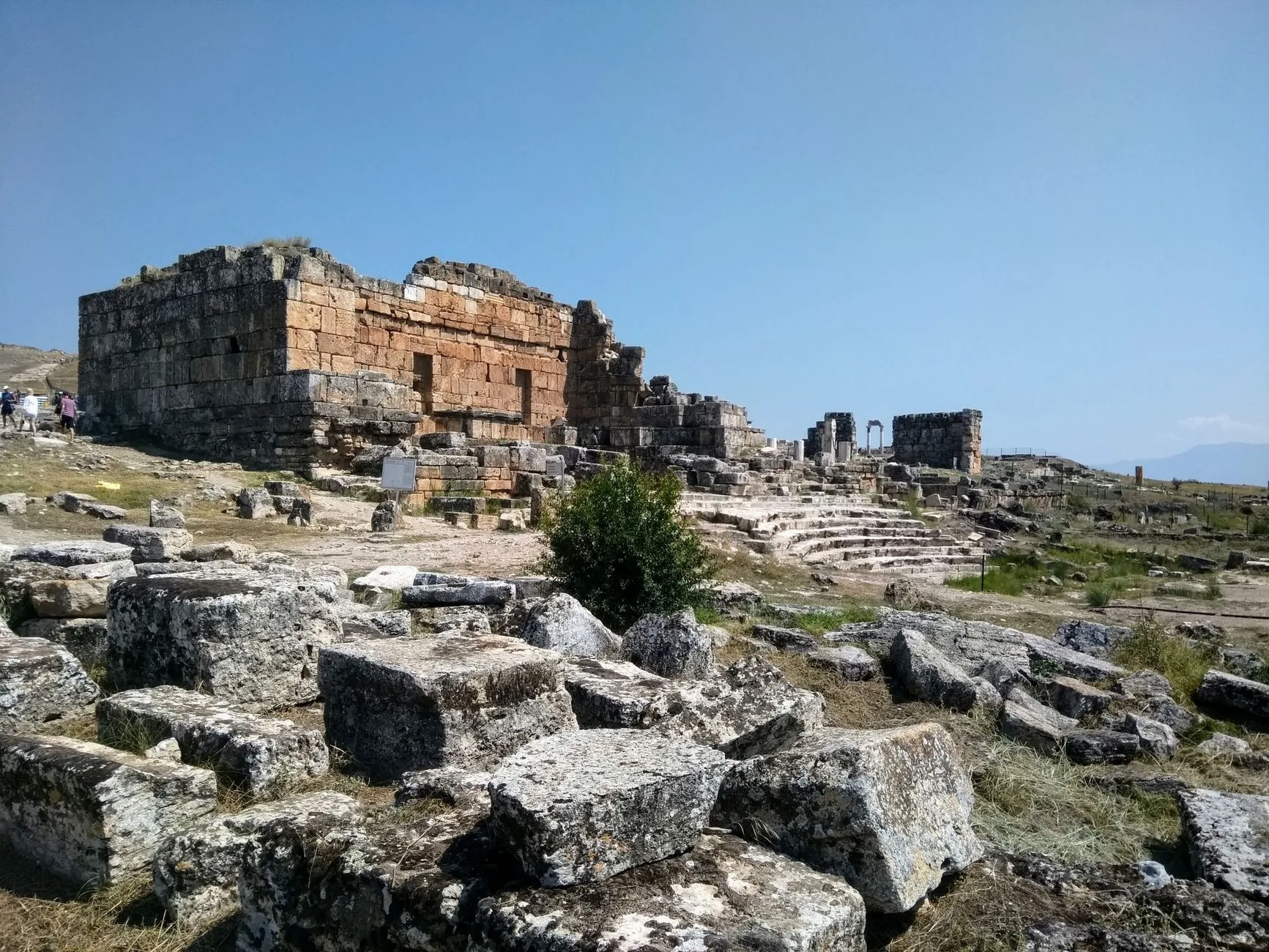
Hierapolis was founded around 190 BC by the Attalid kings of Pergamon as a sacred city centred on its thermal springs. The city grew into one of the most prosperous of Anatolia, its hot springs drawing pilgrims, athletes, and the wealthy from across the Hellenistic and later Roman world. The remains include a vast necropolis, a colonnaded street, a theatre for 12,000 spectators, a large Roman bath complex, and the Temple of Apollo positioned over a geological vent from which carbon dioxide emerged. The thermal pool within the ruins — the Cleopatra Pool — is now open to swimmers who bathe among fallen marble columns in the warm mineralised water. Together with Pamukkale, Hierapolis was inscribed as a UNESCO World Heritage Site in 1988.
| Calcium | 480 mg/L |
| Bicarbonate | 1150 mg/L |
| Magnesium | 65 mg/L |
| Carbon Dioxide | 900 mg/L |
Hierapolis is among the most significant thermal heritage sites in the world — an entire ancient city whose raison d'être was the thermal spring. The ruins span Hellenistic, Roman, and Byzantine periods, preserving 2,000 years of continuous thermal bathing culture. The Cleopatra Pool, where marble columns from a 7th-century earthquake now rest on the spring floor, is an experience found nowhere else on Earth.
Hierapolis adds an archaeological dimension to the Pamukkale thermal experience unique in world wellness tourism — visitors can swim in warm, mineral-rich Roman spring water surrounded by 2,200-year-old ruins under an Anatolian sky. The necropolis alone, with over 1,200 tomb monuments, is one of the best-preserved in the ancient Mediterranean world.
UNESCO management of the site since 1988 has established visitor quotas, restricted access to the most fragile areas, and developed conservation protocols for both the archaeological remains and the travertine formation that makes the site unique.
Websitewww.kultur.gov.tr
AddressPamukkale/Hierapolis, Denizli Province, Turkey