Pamukkale Thermal Springs

🇹🇷 Turkey · Denizli Province

Pamukkale Thermal Springs

Manantiales / Pamukkale Thermal SpringsSprings / Pamukkale Thermal Springs温泉・鉱泉 / Pamukkale Thermal Springs

♨ Temperatura

35°C

⛰ Altitud

354 m

⚗ pH

5.8

💧 TDS

2500 mg/L

🌊 Caudal

250 L/s

📅 Establecido

2nd century BC

♨ Temperature

35°C

⛰ Altitude

354 m

⚗ pH

5.8

💧 TDS

2500 mg/L

🌊 Flow rate

250 L/s

📅 Established

2nd century BC

♨ 温度

35°C

⛰ 標高

354 m

⚗ pH

5.8

💧 TDS

2500 mg/L

🌊 流量

250 L/s

📅 開設

2nd century BC

CalciumBicarbonated🏛 Patrimonio de la UNESCO🏛 UNESCO World Heritage🏛 世界遺産

✓ Verificado el 2026-07-22

✓ Verified on 2026-07-22

✓ 確認日 2026-07-22

Pamukkale, el 'Castillo de Algodón' en turco, es un yacimiento natural de terrazas de travertino blanco formadas durante milenios por el depósito de carbonato cálcico de manantiales termales a 35 °C. Las ruinas romanas de Hierápolis, ciudad termal fundada en el 190 a. C., se integran en el mismo sitio. Declarado Patrimonio Mundial de la UNESCO en 1988, el yacimiento combina geología espectacular, historia clásica y turismo termal activo. El agua termal se canaliza hoy para proteger las formaciones de travertino del deterioro.

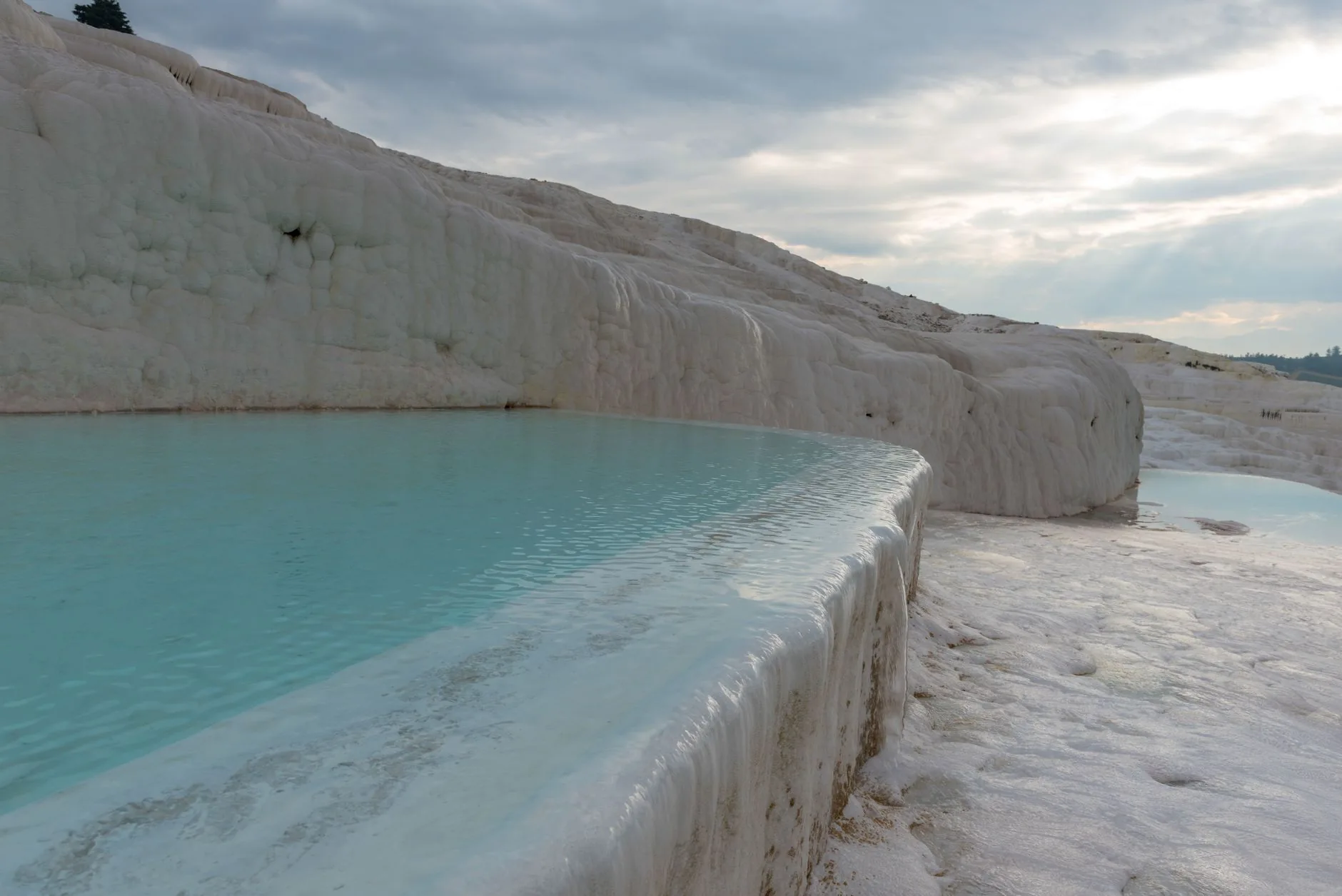
Pamukkale — meaning 'Cotton Castle' in Turkish — is one of the world's most visually dramatic mineral spring sites. Calcium carbonate-saturated thermal water cascades down 200-metre cliffs, depositing brilliant white travertine terraces over thousands of years. The adjacent Greco-Roman city of Hierapolis was built to exploit the therapeutic springs. Pamukkale-Hierapolis is a UNESCO World Heritage Site and draws over two million visitors annually.

Pamukkale Thermal Springsはトルコ・Denizli Provinceに位置するカルシウム泉・重炭酸泉。源泉温度は35℃、標高354mの地に湧出する。泉水は酸性(pH約5.8)の泉質、炭酸カルシウム・炭酸水素塩泉を豊富に含む、総溶解固形物2500 mg/Lが特徴だ。数世紀にわたる歴史を持つ。循環器療法・腎臓・消化器療法など多様な温浴療法が行われる。施設では入浴・飲泉療法・クレオパトラプール(古代プール)などが体験できる。

Minerales

Minerals

ミネラル

Calcium Carbonate1200 mg/L
Bicarbonate650 mg/L
Sulphate410 mg/L
Magnesium90 mg/L
Sodium72 mg/L

Tratamientos

Treatments

トリートメント

CardiovascularKidneyDigestiveRheumatologyEye Conditions

Técnicas

Techniques

技法

BathingDrinking CureCleopatra Pool (Antique Pool)

Patrimonio

Pamukkale-Hierápolis es Patrimonio de la Humanidad por la UNESCO (1988), y abarca las extraordinarias terrazas de travertino y las ruinas de la ciudad grecorromana construida para aprovechar sus aguas termales. Fundada por el Reino de Pérgamo en el siglo II a.C., Hierápolis se convirtió en una importante ciudad termal romana. El sitio alberga una de las necrópolis antiguas mejor conservadas del mundo.

Heritage

Pamukkale-Hierapolis is a UNESCO World Heritage Site (1988), encompassing the extraordinary travertine terraces and the ruins of the Greco-Roman city built to exploit its thermal waters. Founded by the Kingdom of Pergamon in the 2nd century BC, Hierapolis became a major Roman spa city. The site contains one of the best-preserved ancient necropolises in the world.

文化財

パムッカレ・ヒエラポリスは1988年にユネスコ世界遺産に登録されており、驚異的な石灰華段丘と、その温泉を活用するために築かれたギリシャ・ローマ都市の遺跡を含む。紀元前2世紀にペルガモン王国によって建設されたヒエラポリスは、ローマ時代の主要な温泉都市となった。この遺跡には、世界で最も保存状態の良い古代の墓地遺跡の一つが残されている。

Cultura

Las aguas termales de Pamukkale han sido centrales para la cultura espiritual y curativa de Anatolia durante más de 2.000 años. En la Antigüedad, el Plutonio —una cueva que emite gases volcánicos— era considerado una puerta al inframundo y un lugar de rituales religiosos. Hoy, bañarse en la Piscina Antigua de Cleopatra —donde yacen sumergidas antiguas columnas romanas— conecta a los visitantes con este hilo continuo de la experiencia humana.

Culture

The thermal waters of Pamukkale have been central to Anatolian spiritual and healing culture for over 2,000 years. In antiquity, the Plutonium — a cave emitting volcanic gases — was considered a gateway to the underworld and a site of religious rituals. Today, bathing in the Cleopatra Antique Pool — where ancient Roman columns lie submerged — connects visitors to this continuous thread of human experience.

文化

パムッカレの温泉水は2,000年以上にわたり、アナトリアの精神文化と癒しの文化の中心であり続けてきた。古代には、火山性ガスを噴出する洞窟プルトニウムは冥界への入口とされ、宗教儀礼の場であった。今日、古代ローマの列柱が水中に沈むクレオパトラ古代プールで入浴することは、訪問者をこの連綿と続く人間の営みの糸に結びつける。

Sostenibilidad

Las terrazas de travertino de Pamukkale están bajo un activo régimen de conservación de la UNESCO tras décadas de daño ambiental causado por el exceso de turismo. Está prohibido el uso de calzado sobre las terrazas para evitar la erosión. El flujo del agua ha sido redirigido para permitir la remineralización natural de las formaciones decoloradas, y el número anual de visitantes se gestiona mediante el monitoreo científico de las formaciones de carbonato de calcio.

Sustainability

Pamukkale's travertine terraces are under active UNESCO conservation management following decades of environmental damage from tourism overuse. Footwear is prohibited on the terraces to prevent erosion. Water flow has been redirected to allow natural re-mineralisation of bleached formations, and annual visitor numbers are managed with scientific monitoring of the calcium carbonate formations.

持続可能性

パムッカレの石灰華段丘は、観光の過剰利用による数十年にわたる環境破壊を経て、現在はユネスコによる積極的な保全管理下に置かれている。浸食を防ぐため、段丘上では履物の着用が禁止されている。白化した地形の自然な再石灰化を促すため水の流れが誘導し直されており、炭酸カルシウム地形の科学的モニタリングに基づいて年間の訪問者数が管理されている。

Contacto

Teléfono+90 258 272 2077

Sitio webwhc.unesco.org/en/list/485

DirecciónPamukkale, 20280 Pamukkale/Denizli, Turkey

Contact

Phone+90 258 272 2077

Websitewhc.unesco.org/en/list/485

AddressPamukkale, 20280 Pamukkale/Denizli, Turkey

連絡先

電話+90 258 272 2077

ウェブサイトwhc.unesco.org/en/list/485

住所Pamukkale, 20280 Pamukkale/Denizli, Turkey

← Volver al directorio completo Ver en el mapa interactivo← Back to the full directory View on the interactive map← ディレクトリ全体に戻る インタラクティブマップで見る