Manantiales / Higashiyama OnsenSprings / Higashiyama Onsen温泉・鉱泉 / Higashiyama Onsen
📅 Establecido
8th century (traditionally attributed to the monk Gyoki)
📅 Established
8th century (traditionally attributed to the monk Gyoki)
📅 開設
8th century (traditionally attributed to the monk Gyoki)
SulphatedChlorinated (Sodium Chloride)
✓ Verificado el 2026-07-28
✓ Verified on 2026-07-28
✓ 確認日 2026-07-28
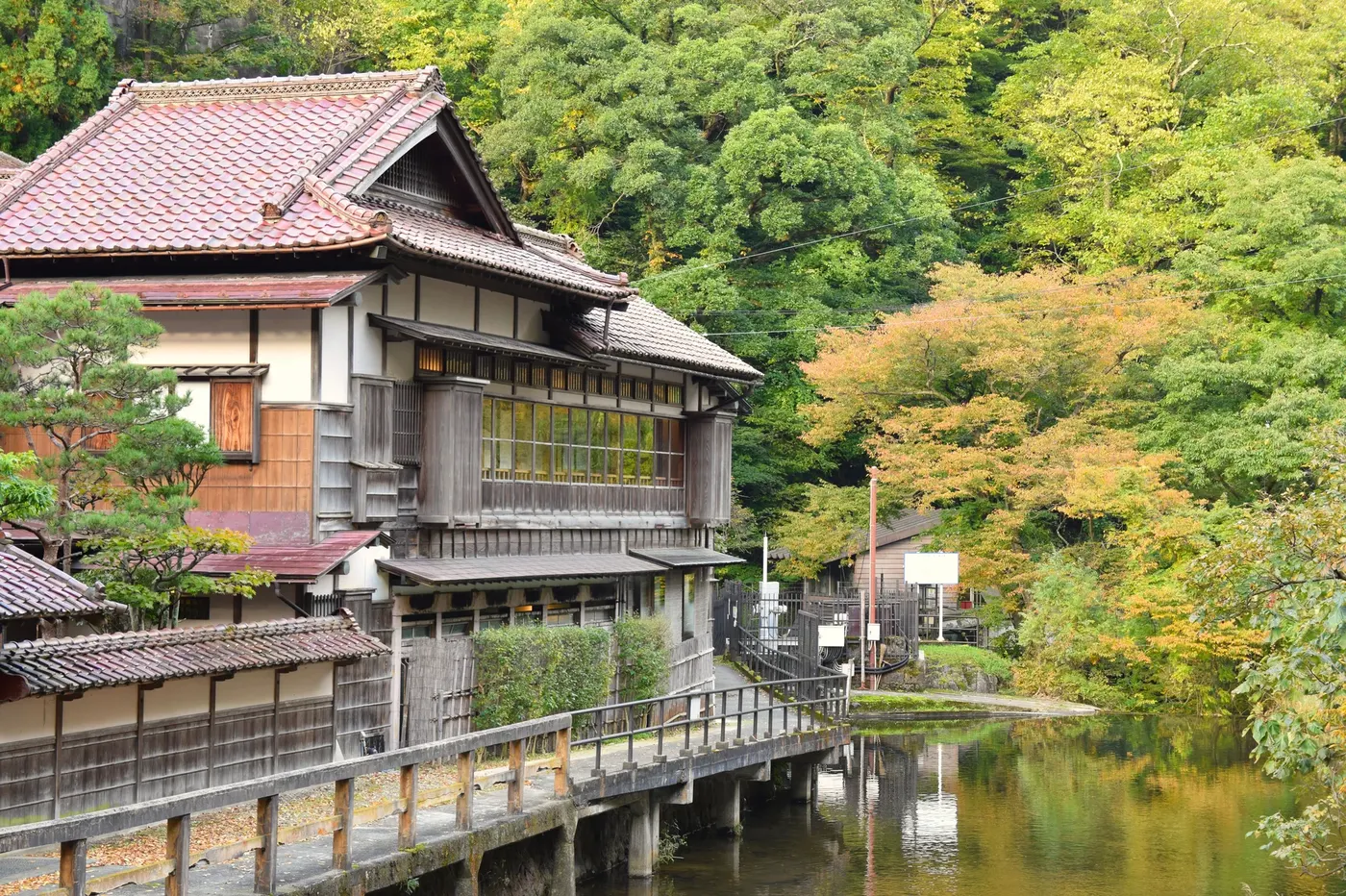
Higashiyama Onsen es una localidad de aguas termales a orillas del río Yu en Aizuwakamatsu, que según la tradición fue descubierta hace unos 1.300 años por el monje Gyoki. Durante el periodo Edo floreció como retiro para los samuráis y señores del dominio de Aizu, y las tradiciones de las geigi (geishas) de Higashiyama, registradas por primera vez en el periodo Edo, se siguen practicando hoy. El agua de manantial es una fuente sulfatada-clorurada de calcio y sodio, con una temperatura de 57.4°C y un pH de 7.5. Unos 15 hoteles y ryokan de aguas termales bordean el valle, y la localidad se cuenta entre los tres principales balnearios de Tohoku.
Higashiyama Onsen is a hot spring resort town along the Yu River in Aizuwakamatsu, traditionally said to have been discovered around 1,300 years ago by the monk Gyoki. During the Edo period it flourished as a retreat for the Aizu Domain's samurai and lords, and Higashiyama geigi (geisha) traditions, first recorded in the Edo period, are still practiced today. The source water is a calcium-sodium sulfate-chloride spring measured at 57.4°C with a pH of 7.5. About 15 hot spring hotels and ryokan line the valley, and the town is counted among Tohoku's top three onsen resorts.
東山温泉は、会津若松市の湯川沿いに広がる温泉地で、伝承によれば約1300年前に僧・行基によって発見されたとされる。江戸時代には会津藩の武士や藩主の保養地として栄え、江戸時代に始まったとされる東山芸妓の伝統は今日まで受け継がれている。源泉はカルシウム・ナトリウム-硫酸塩・塩化物温泉で、泉温57.4度、pH7.5を測定する。渓谷沿いには約15軒の温泉ホテル・旅館が立ち並び、東北屈指の温泉地の一つに数えられている。
Técnicas
Techniques
技法
Bathing (Onsen)
Patrimonio
Según la tradición, Higashiyama Onsen fue descubierto hace unos 1.300 años por el monje Gyoki. Floreció durante el periodo Edo como retiro para los samuráis y señores feudales del dominio de Aizu, y más tarde atrajo a poetas y escritores.
Heritage
Higashiyama Onsen is traditionally said to have been discovered around 1,300 years ago by the monk Gyoki. It flourished during the Edo period as a retreat for the Aizu Domain's samurai retainers and feudal lords, and later attracted poets and writers.
文化財
東山温泉は伝承によれば約1300年前に僧・行基によって発見されたとされる。江戸時代には会津藩の武士や藩主の保養地として栄え、後には多くの詩人・文人も訪れた。
Cultura
El entretenimiento de las geigi (geishas) de Higashiyama, registrado por primera vez en el periodo Edo (1603-1868), continúa hoy en día, con geigi formadas que interpretan música y danza tradicionales para los huéspedes de los ryokan del balneario.
Culture
Higashiyama geigi (geisha) entertainment, first recorded in the Edo period (1603-1868), continues today, with trained geigi performing traditional music and dance for guests at the resort's ryokan.
文化
江戸時代(1603~1868年)に始まったとされる東山芸妓によるもてなしは今日も続いており、修練を積んだ芸妓が旅館の客に向けて伝統的な音曲や舞を披露している。
Otros manantiales en Japan