Manantiales / Khatt Hot SpringsSprings / Khatt Hot Springs温泉・鉱泉 / Khatt Hot Springs
📅 Establecido
Traditional use; resort developed 2000s
📅 Established
Traditional use; resort developed 2000s
📅 開設
Traditional use; resort developed 2000s
GeothermalMountain Springs
✓ Verificado el 2026-07-22
✓ Verified on 2026-07-22
✓ 確認日 2026-07-22
Los Manantiales de Khatt en Ras Al Khaimah son los únicos manantiales geotérmicos naturales significativos de los Emiratos Árabes Unidos, una anomalía geológica en un país más conocido por la arena que por el agua volcánica. Los manantiales emergen de fracturas en las Montañas Hajar — una cordillera compuesta principalmente de ofiolita, corteza oceánica antigua empujada sobre el margen continental arábigo. El agua aflora a unos 40 °C, moderadamente mineralizada. Un resort spa ha sido desarrollado en la aldea de Khatt con piscinas de inmersión alimentadas por los manantiales naturales.
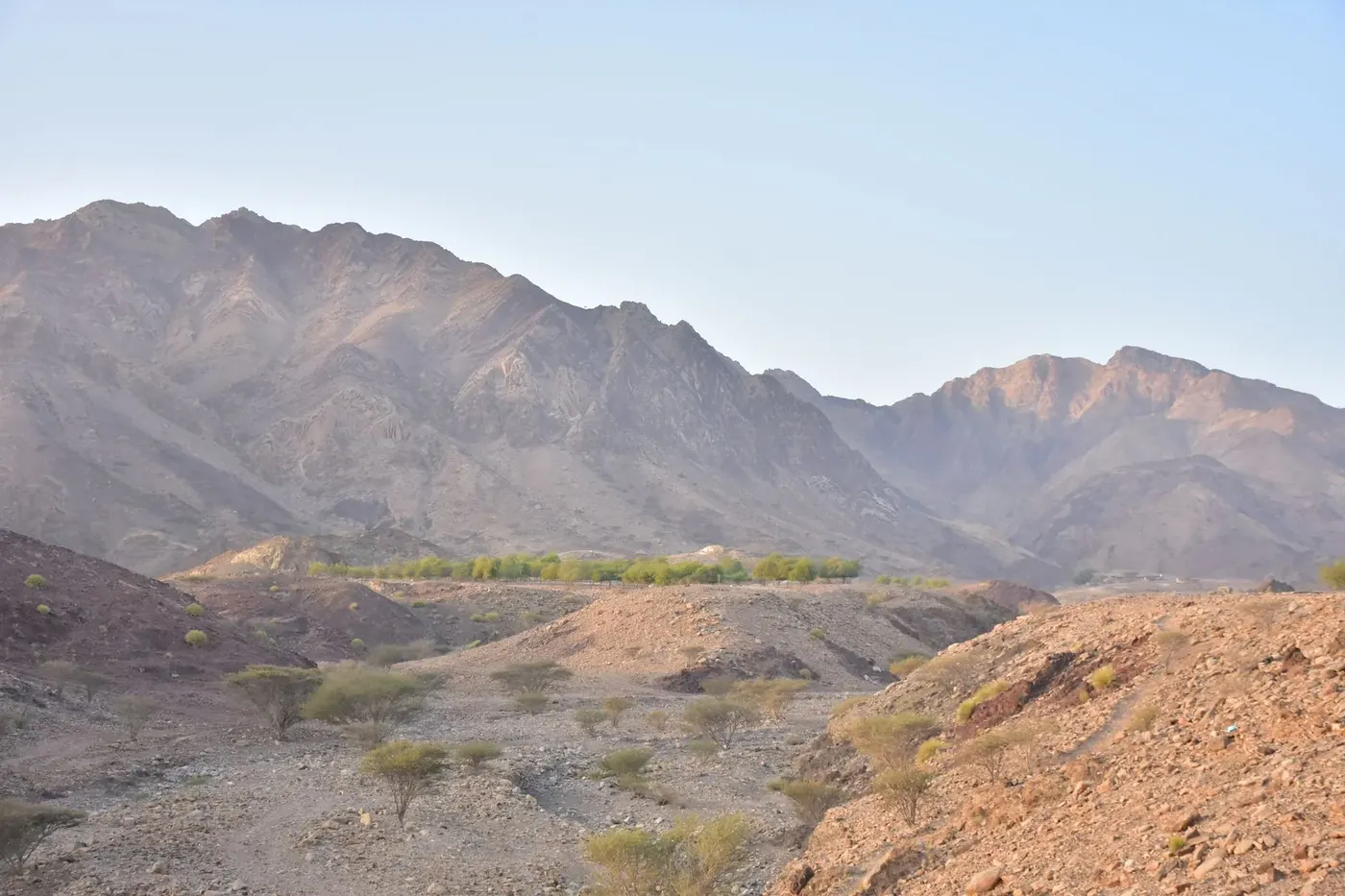
The Khatt Hot Springs in Ras Al Khaimah are the United Arab Emirates' only significant natural geothermal springs, a geological anomaly in a country better known for sand than for volcanic water. The springs emerge from fractures in the Hajar Mountains — a range composed primarily of ophiolite, ancient oceanic crust thrust onto the Arabian continental margin during the Late Cretaceous. The water rises at approximately 40°C, moderately mineralised, and is thought to be heated by residual thermal energy within the deeply buried ophiolite sequence. A spa resort has been developed at Khatt village, offering soaking pools fed by the natural spring water. The rugged backdrop of the northern Hajar Mountains — rocky pinnacles, dry wadis, and ancient falaj irrigation terraces — provides a setting dramatically different from the coastal luxury for which the UAE is better known.
Khatt Hot SpringsはUnited Arab Emirates・Ras Al Khaimah, Hajar Mountainsに位置する地熱温泉。源泉温度は40℃、標高320mの地に湧出する。泉水はアルカリ性(pH約7.5)の泉質、ナトリウム泉・塩化物泉を豊富に含む、総溶解固形物890 mg/Lが特徴だ。リラクゼーション・筋肉の回復・皮膚など多様な温浴療法が行われる。施設では入浴・浸浴プール・登山ハイキングなどが体験できる。
Minerales
Minerals
ミネラル
| Sodium | 195 mg/L |
| Chloride | 165 mg/L |
| Sulphate | 88 mg/L |
| Calcium | 58 mg/L |
| Magnesium | 32 mg/L |
Tratamientos
Treatments
トリートメント
RelaxationMuscle RecoverySkin
Técnicas
Techniques
技法
BathingSoaking poolsMountain hiking
Patrimonio
Las montañas Hajar de Ras Al Khaimah conservan parte de la geología expuesta más antigua de la península arábiga, incluidas secuencias ofiolíticas del Cretácico que alguna vez formaron parte del antiguo fondo marino del océano Tetis. La región fue hogar de asentamientos de la Edad del Bronce de la cultura Umm al-Nar (2600-2000 a.C.), que comerciaban con cobre extraído de la cordillera de Hajar por todo el mundo antiguo. El sistema de riego falaj —aún parcialmente en funcionamiento— es Patrimonio Cultural Inmaterial de la UNESCO.
Heritage
The Hajar Mountains of Ras Al Khaimah preserve some of the oldest exposed geology in the Arabian Peninsula, including Cretaceous ophiolite sequences that were once part of the ancient Tethys Ocean seafloor. The region was home to Bronze Age settlements of the Umm al-Nar culture (2600–2000 BC), who traded copper mined from the Hajar range across the ancient world. The falaj irrigation system — still partially functioning — is a UNESCO Intangible Cultural Heritage.
文化財
ラス・アル・ハイマの八ジャル山脈は、かつて古代テティス海の海底の一部であった白亜紀オフィオライト層を含む、アラビア半島でも最古級の露出地質を保存している。この地域は青銅器時代のウンム・アン=ナール文化(紀元前2600〜2000年)の集落があった場所であり、彼らはハジャル山脈で採掘した銅を古代世界各地と交易していた。今も一部が機能しているファラジ灌漑システムは、ユネスコ無形文化遺産に登録されている。
Cultura
En la cultura montañesa tradicional emiratí y omaní, los manantiales se entienden como dones divinos —'regalos de los yinn' en algunas tradiciones populares— y como lugares de renovación tanto espiritual como física. Las montañas Hajar de Ras Al Khaimah conservan un carácter cultural distinto al de la costa de los EAU, manteniendo comunidades agrícolas de montaña, el cultivo de la palmera datilera y una tradición de baño medicinal en manantiales que precede a la era del petróleo.
Culture
In traditional Emirati and Omani mountain culture, springs are understood as divine gifts — 'gifts of the jinn' in some folk traditions — and places of spiritual as well as physical renewal. The Hajar Mountains of Ras Al Khaimah retain a distinct cultural character from the coastal UAE, preserving mountain agricultural communities, date palm cultivation, and a tradition of medicinal spring bathing that predates the oil era.
文化
エミラティおよびオマーンの伝統的な山岳文化において、泉は神からの贈り物——民間伝承の一部では「ジンの贈り物」——であり、精神的にも肉体的にも再生をもたらす場所と理解されている。ラス・アル・ハイマの八ジャル山脈は、UAEの沿岸部とは異なる独自の文化的性格を保っており、山岳農業共同体、ナツメヤシ栽培、そして石油時代以前から続く薬効泉での入浴の伝統を今に伝えている。
Sostenibilidad
Los manantiales de Khatt fluyen desde un acuífero geotérmico profundo sin bombeo mecánico. Las montañas Hajar circundantes están sujetas a una presión creciente derivada del turismo de senderismo y el desarrollo de complejos turísticos. La estrategia turística de Ras Al Khaimah enfatiza el turismo de montaña sostenible como contrapartida al desarrollo de resorts costeros, posicionando los manantiales de Khatt como un activo del patrimonio natural.
Sustainability
The Khatt springs flow from a deep geothermal aquifer without mechanical pumping. The surrounding Hajar Mountains are subject to increasing pressure from hiking tourism and resort development. Ras Al Khaimah's tourism strategy emphasises sustainable mountain tourism as a counterpart to coastal resort development, with the Khatt springs positioned as a natural heritage asset.
持続可能性
カット温泉は、機械的な汲み上げを行うことなく深部の地熱帯水層から湧出している。周辺の八ジャル山脈は、ハイキング観光やリゾート開発による圧力の高まりにさらされている。ラス・アル・ハイマの観光戦略は、沿岸部のリゾート開発と対をなす持続可能な山岳観光を重視しており、カット温泉は自然遺産資産として位置づけられている。