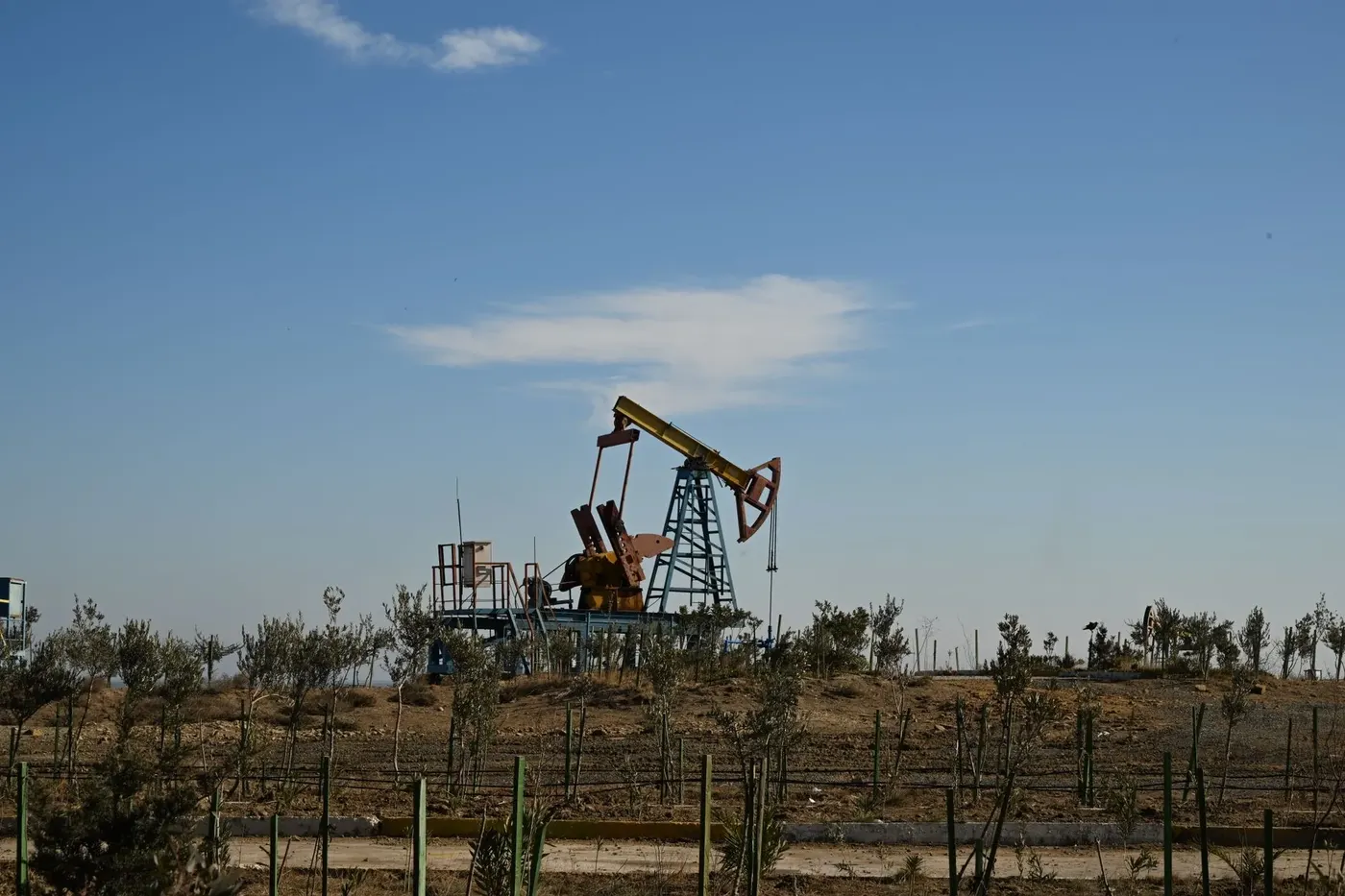
Photo by Miguel Cuenca on Pexels
🇦🇿 Azerbaijan · Goranboy District
♨ Temperature
37°C
⛰ Altitude
420 m
⚗ pH
7
💧 TDS
0 mg/L
🌊 Flow rate
—
📅 Established
Known since antiquity; Soviet sanatoriums built 1930s–1960s
✓ Verified on 2026-07-22
Naftalan is a small city in the Goranboy District of Azerbaijan whose claim to uniqueness is absolute: it is the only place on Earth where the practice of bathing in naturally occurring crude oil has become an established medical tradition. The petroleum here — Naftalan crude oil — is unlike commercial crude: its extraordinary concentration of naphthenic compounds (cycloalkanes) gives it a low viscosity, an absence of commercial hydrocarbon value, and a chemical composition that local and Soviet medical practice associated with rheumatic and skin conditions over centuries of use. Marco Polo is said to have mentioned the oil springs in the 13th century, noting that the local people used the liquid to treat ailments of the skin. The Soviet government developed Naftalan into a major sanatorium complex in the 1930s to 1960s, treating hundreds of thousands of patients annually at peak capacity. A full treatment course involves 8 to 10 immersion baths of 8 to 10 minutes each, taken over several days. The oil is heated to body temperature and patients are submerged to the neck, then carefully cleaned. Post-Soviet decline diminished the resort, but Azerbaijani investment since the 2000s has partially restored several sanatoriums, attracting medical tourists primarily from Russia, Ukraine, and the Caucasus region.
| Naphthenic hydrocarbons | 9800 mg/L |
| Cycloalkanes (naphthenes) | 7200 mg/L |
| Paraffins | 850 mg/L |
The Naftalan oil springs were documented in Islamic geographical texts of the medieval period and referenced in travellers' accounts from the Silk Road era. The oil was known as far as China and Central Asia as a topical remedy. The city of Naftalan was developed specifically around its oil baths — unlike most spa cities, which grew up around pre-existing settlements — giving it a character as a purpose-built medical resort with no other economic function. The Soviet-era sanatorium architecture, a mix of Stalinist neoclassical and later modernist styles, constitutes one of the largest single-purpose balneological complexes in the world.
The experience of bathing in crude oil is psychologically unusual: the thick, dark liquid, heated to body temperature, has a viscosity and density very different from water, and the body floats differently in it. Post-Soviet Azerbaijani culture has embraced Naftalan as a national wellness curiosity — a place that exists nowhere else on Earth, offering a practice too strange to be invented. The sanatoriums that operated under Soviet state medicine now accept private patients, and the international medical tourism market is slowly discovering Naftalan as a genuinely singular destination.
Naftalan crude oil is extracted from shallow wells within and around the city. The oil cannot be commercially refined due to its high naphthene content and low paraffin fraction, making the medical bath tradition its only economically viable use. The oil used in each patient bath is not reused — a significant resource commitment — and Azerbaijan's petroleum industry governance monitors extraction to prevent overproduction of the non-commercial crude.
Websitenaftalan.az
AddressNaftalan, Goranboy District, Azerbaijan