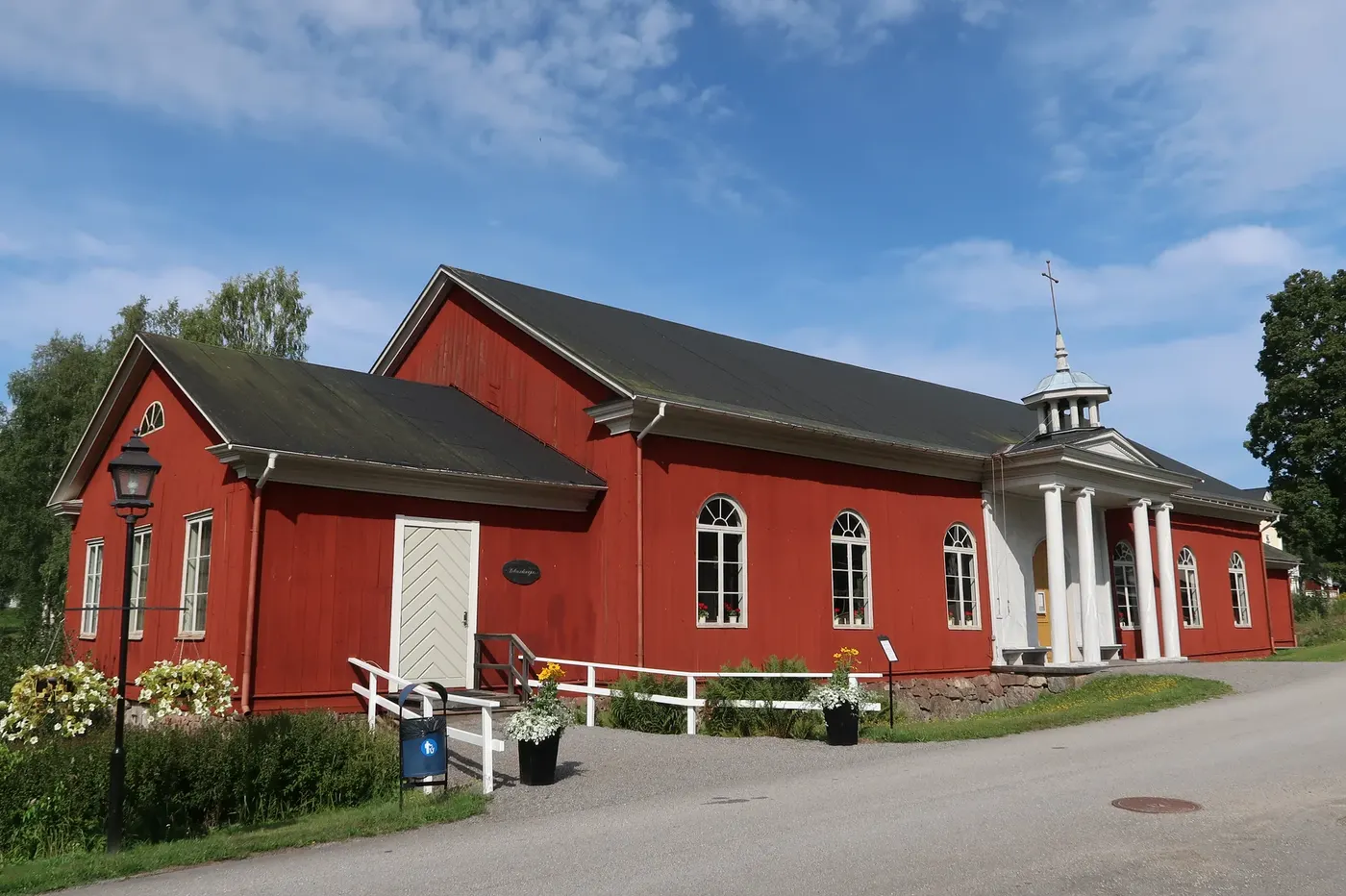
Photo by Tekannan, via Wikimedia Commons (CC BY-SA 4.0)
🇸🇪 Sweden · Örebro County (Hällefors Municipality)
Photo by Tekannan, via Wikimedia Commons (CC BY-SA 4.0)
🇸🇪 Sweden · Örebro County (Hällefors Municipality)
♨ Temperature
—
⛰ Altitude
—
⚗ pH
—
💧 TDS
—
🌊 Flow rate
—
📅 Established
1720 (spa town founded by Conrad Ribbing, governor of Örebro County; royal privileges granted 1759)
✓ Verified on 2026-07-31
Loka Brunn sits on a narrow isthmus between the lakes Norra Loken and Södra Loken in Hällefors Municipality, deep in the historic iron-mining region of Bergslagen, Örebro County. The site's ferruginous (iron-bearing) spring had likely been known since medieval times, when it lay along a pilgrim route to the shrine of Saint Olaf in Nidaros (Trondheim), but its formal history as a health resort begins in 1720, when provincial governor Conrad Ribbing established a spa town around the source and secured its mineral rights. Carl Linnaeus described the spring during his 1746 journey through the province, and Loka went on to receive two royal visitors, King Adolf Fredrik and Gustav III, in the 1760s. Through the 19th century it became one of Sweden's most fashionable "brunnsorter" — the classic Nordic institution of a spring-side cure town — where visitors came to drink the iron-rich water and take mud baths for rheumatic complaints, supported by a resident physician, pharmacy and medicinal garden. Today the 54-building resort, owned by the Spendrup brewing family since 2007, still operates as a spa hotel and conference destination, and houses Sweden's national Spa Museum (Sveriges Kurortsmuseum, opened 1995) in a cluster of restored 18th-century buildings.
Loka Brunn is recognised as one of Sweden's classic historic spa towns (brunnsorter), alongside Medevi (founded 1678) and Ramlösa, and its 18th- and 19th-century wooden buildings are preserved as a heritage ensemble. Sweden's national Spa Museum operates on site in four restored 1700s buildings. The resort also carries a lesser-known 20th-century history as a refugee shelter, housing Danish and Norwegian refugees after the Second World War and a Hungarian refugee camp following the 1956 uprising.
As a classic Swedish "brunnsort," Loka Brunn embodied the 18th- and 19th-century European cure-town culture of "dricka brunn" — literally "drinking the well" — a seasonal ritual of taking the waters, promenading between treatments, and socialising among the aristocracy and educated classes who travelled from across Sweden to the resort each summer.