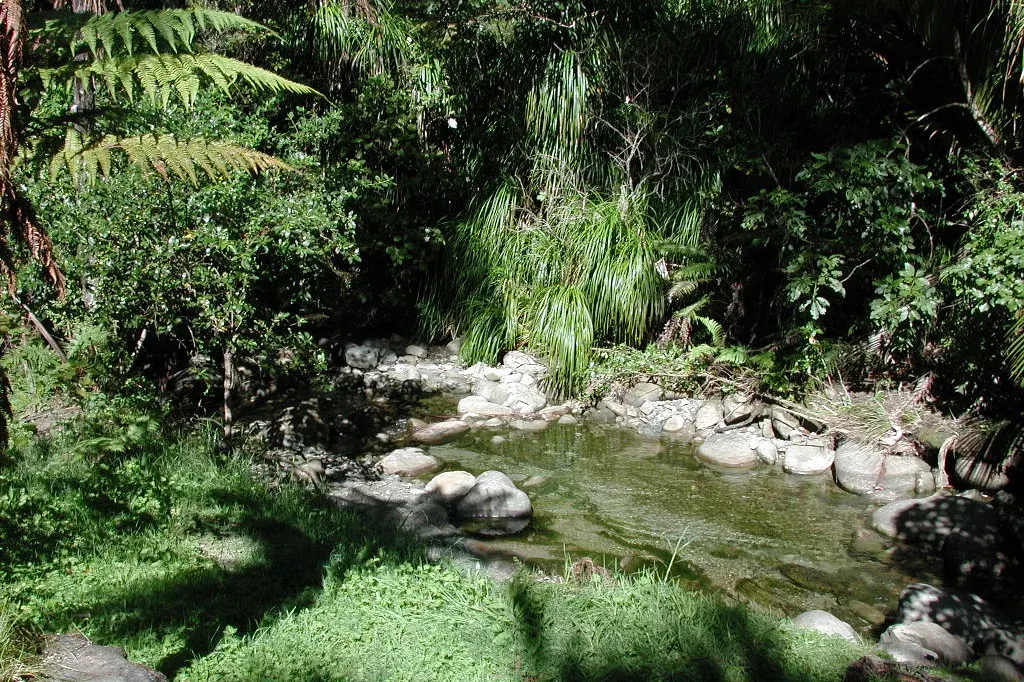
Photo by Pseudopanax, via Wikimedia Commons (Public domain)
🇳🇿 New Zealand · Mōrere, East Coast, North Island
Photo by Pseudopanax, via Wikimedia Commons (Public domain)
🇳🇿 New Zealand · Mōrere, East Coast, North Island
♨ Temperature
—
⛰ Altitude
—
⚗ pH
—
💧 TDS
—
🌊 Flow rate
—
📅 Established
—
✓ Verified on 2026-07-28
Nga Hua o Mōrere (Mōrere Hot Springs) is an unusual saline hot-spring system on the East Coast of the North Island, between Wairoa and Gisborne, where mineral-rich hot seawater rises from a fault line in the Mangakawa valley, producing an estimated 250,000 litres a day. The water is piped to a series of public and private pools, including the Nikau Pools, set within native rainforest in the Mōrere Springs Scenic Reserve. The springs were traditionally valued by local iwi for healing and restoration, and were first documented by Europeans in 1884, when government surveyor George Walker and Edward Bendall recorded them. The site's official name reflects a renewed partnership in stewardship between local iwi — Ngāti Rakaipaaka and Rongomaiwahine — and the Department of Conservation.
The springs are associated with Ngāti Rakaipaaka and Rongomaiwahine and were traditionally valued for healing and restoration. They were first recorded by Europeans in 1884, when government surveyor George Walker and Edward Bendall documented the site. The current name, Nga Hua o Mōrere, reflects a renewed partnership between the iwi and the Department of Conservation in managing the reserve.
AddressState Highway 2, Mōrere Springs Scenic Reserve, near Nuhaka, East Coast, New Zealand (about 40 km northeast of Wairoa, 52 km south of Gisborne, 15 km north of Nuhaka)