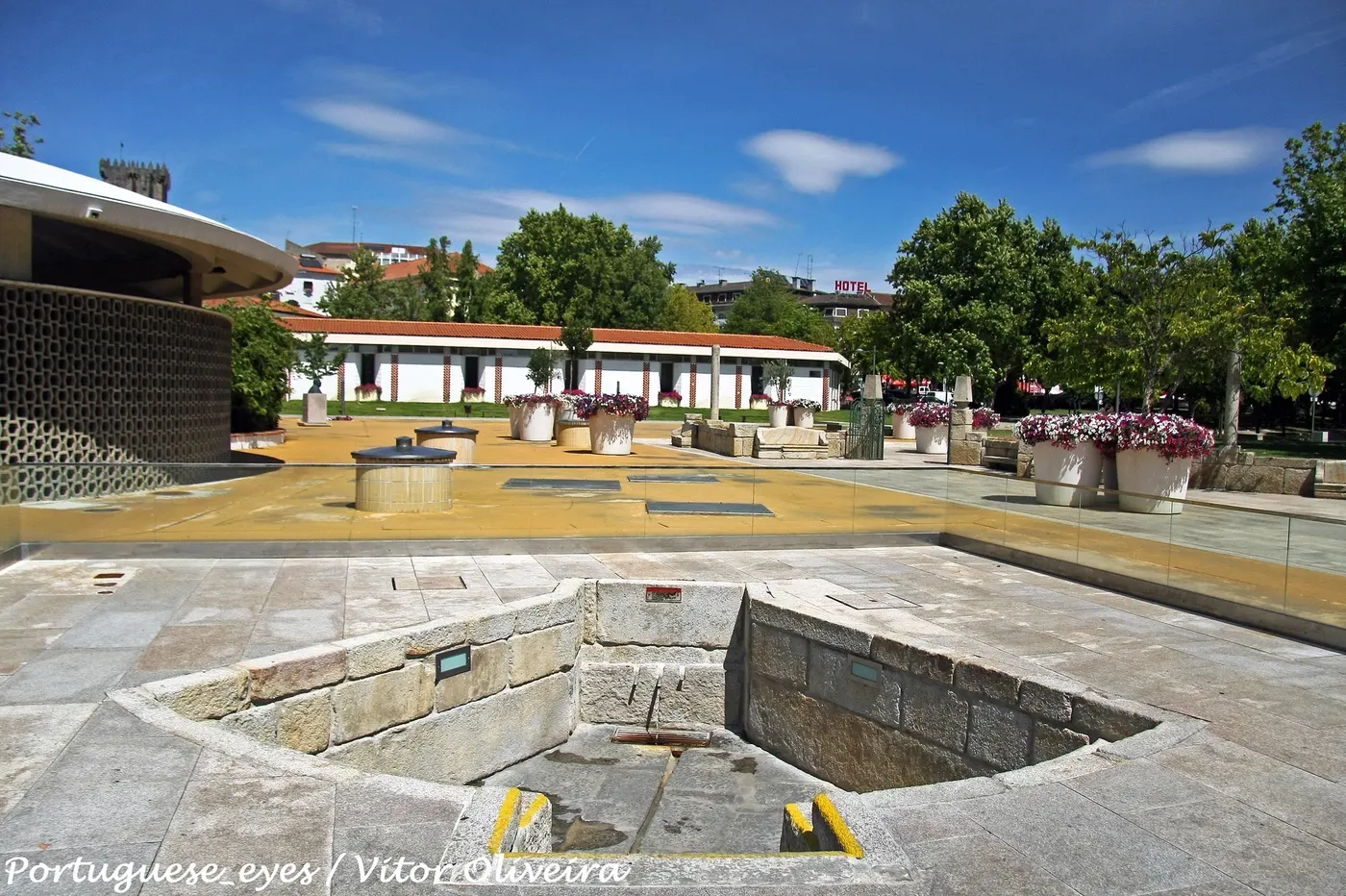
Manantiales / Termas de ChavesSprings / Termas de Chaves温泉・鉱泉 / Termas de Chaves
📅 Establecido
Roman origins; official thermal operating permit granted in 1899; significantly developed in the 20th century by physician Mário Carneiro
📅 Established
Roman origins; official thermal operating permit granted in 1899; significantly developed in the 20th century by physician Mário Carneiro
📅 開設
Roman origins; official thermal operating permit granted in 1899; significantly developed in the 20th century by physician Mário Carneiro
BicarbonatedFluoridated
✓ Verificado el 2026-07-30
✓ Verified on 2026-07-30
✓ 確認日 2026-07-30
Termas de Chaves se encuentra en los jardines junto al río Tâmega, en la histórica ciudad de Chaves, cerca de la frontera con España. El agua brota entre 73ºC y 76ºC durante todo el año, entre las más calientes de la península ibérica, con un pH de 6,80 y una composición alcalina, bicarbonatada-sódica, fluorada y rica en gas carbónico. Su uso se remonta a la época romana, y en 1899 se concedió el permiso oficial de explotación; el balneario se amplió notablemente en el siglo XX gracias al médico Mário Carneiro. Fue nombrado 'Mejor Unidad Termal de Portugal' durante tres años consecutivos hasta 2006 por el programa de salud sénior de INATEL, y se usa tradicionalmente para afecciones reumáticas, musculoesqueléticas, digestivas, respiratorias y dermatológicas.
Termas de Chaves sits in the riverside gardens along the Tâmega River in the historic city of Chaves, near the Spanish border. The water emerges at 73–76ºC year-round, among the hottest in the Iberian Peninsula, with a pH of 6.80 and an alkaline, bicarbonate-sodium, fluoridated, carbon-gas-rich composition. Use dates to Roman times, and an official operating permit was granted in 1899; the spa was significantly expanded in the 20th century through the efforts of physician Mário Carneiro. It was named Portugal's best thermal unit ('Melhor Unidade Termal de Portugal') for three consecutive years through 2006 by INATEL's senior health program, and it is traditionally used for rheumatic, musculoskeletal, digestive, respiratory and dermatological conditions.
テルマス・デ・シャヴィシュは、スペイン国境に近い歴史都市シャヴィシュのタメガ川沿いの庭園に位置する。湧出温度は年間を通じて73℃~76℃と、イベリア半島でも最高水準。pHは6.80で、アルカリ性・重炭酸ナトリウム泉・フッ素を含み炭酸ガスに富む泉質。利用の歴史はローマ時代に遡り、1899年に正式な営業許可が交付された。20世紀には医師マリオ・カルネイロの尽力により大幅に拡張された。INATELのシニア健康プログラムにより2006年まで3年連続で「ポルトガル最優秀温泉施設」に選出され、リウマチ性疾患、運動器疾患、消化器疾患、呼吸器疾患、皮膚疾患に伝統的に用いられている。
Técnicas
Techniques
技法
Bathing
Patrimonio
El uso de los manantiales de Chaves se remonta a la época romana. Se concedió un permiso oficial de explotación en 1899, y el balneario se desarrolló notablemente en el siglo XX gracias a los esfuerzos del médico Mário Carneiro.
Heritage
Use of the Chaves springs dates to Roman times. An official operating permit was granted in 1899, and the spa was significantly developed in the 20th century through the efforts of physician Mário Carneiro.
文化財
シャヴィシュの温泉の利用はローマ時代に遡る。1899年に正式な営業許可が交付され、20世紀には医師マリオ・カルネイロの尽力により大幅に発展した。
Cultura
El balneario registra su mayor afluencia en verano, cuando llegan miles de visitantes de aguas termales ('aquistas'), aunque la demanda invernal ha ido creciendo. Fue reconocido como la mejor unidad termal de Portugal durante tres años consecutivos hasta 2006 por el programa de salud sénior de INATEL.
Culture
The spa sees its highest visitor numbers in summer, when thousands of thermal-water visitors ('aquistas') arrive, though winter demand has been growing. It was recognized as Portugal's best thermal unit for three consecutive years through 2006 by INATEL's senior health program.
文化
夏には数千人の温泉利用者(アキスタス)が訪れ最も来客数が多くなるが、冬の需要も増加傾向にある。INATELのシニア健康プログラムにより2006年まで3年連続でポルトガル最優秀温泉施設に認定された。
Otros manantiales en Portugal
Other springs in Portugal